Gas engines and biogas: oil that lasts longer than a week
Gas engines on landfill gas and biogas often have their oil changed every week because the silicon reading rises. With offline filtration in a kidney loop and the right samples, the oil can stay in the engine many times longer.
Silicon and siloxanes in the oil
Landfill gas, biogas and mine gas carry silicon into the engine, both as dust and as siloxanes in the gas. It is highly abrasive and wears the engine's components.
The silicon reading is therefore what decides the oil change. The limit is between about 100 and 300 ppm depending on engine and gas, and many operators change oil every week, even when base number, acid number and pH are fine.
What the ICP analysis does not see
The standard silicon analysis (ICP to ASTM D5185) only measures particles below about 10 µm and does not distinguish between forms of silicon. So it does not show whether the abrasive particles have been removed.
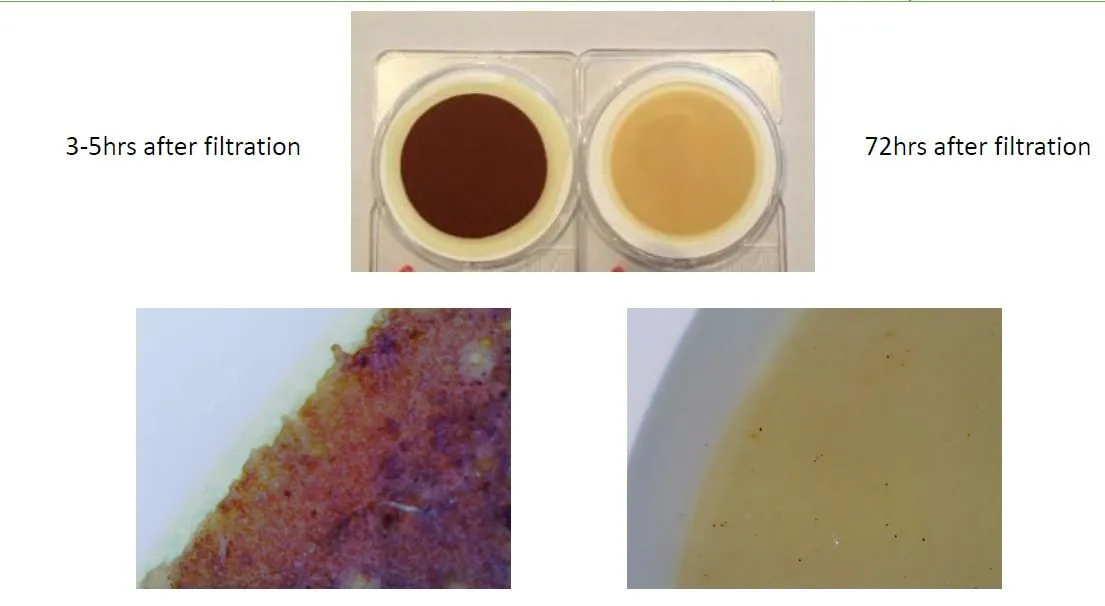
A membrane patch (micropatch) does. At a UK power generation company the silicon reading was almost unchanged after filtration, but iron fell from 113 to 3 ppm and the membrane patch showed far fewer abrasive particles.
Cleaned in a kidney loop while the engine runs
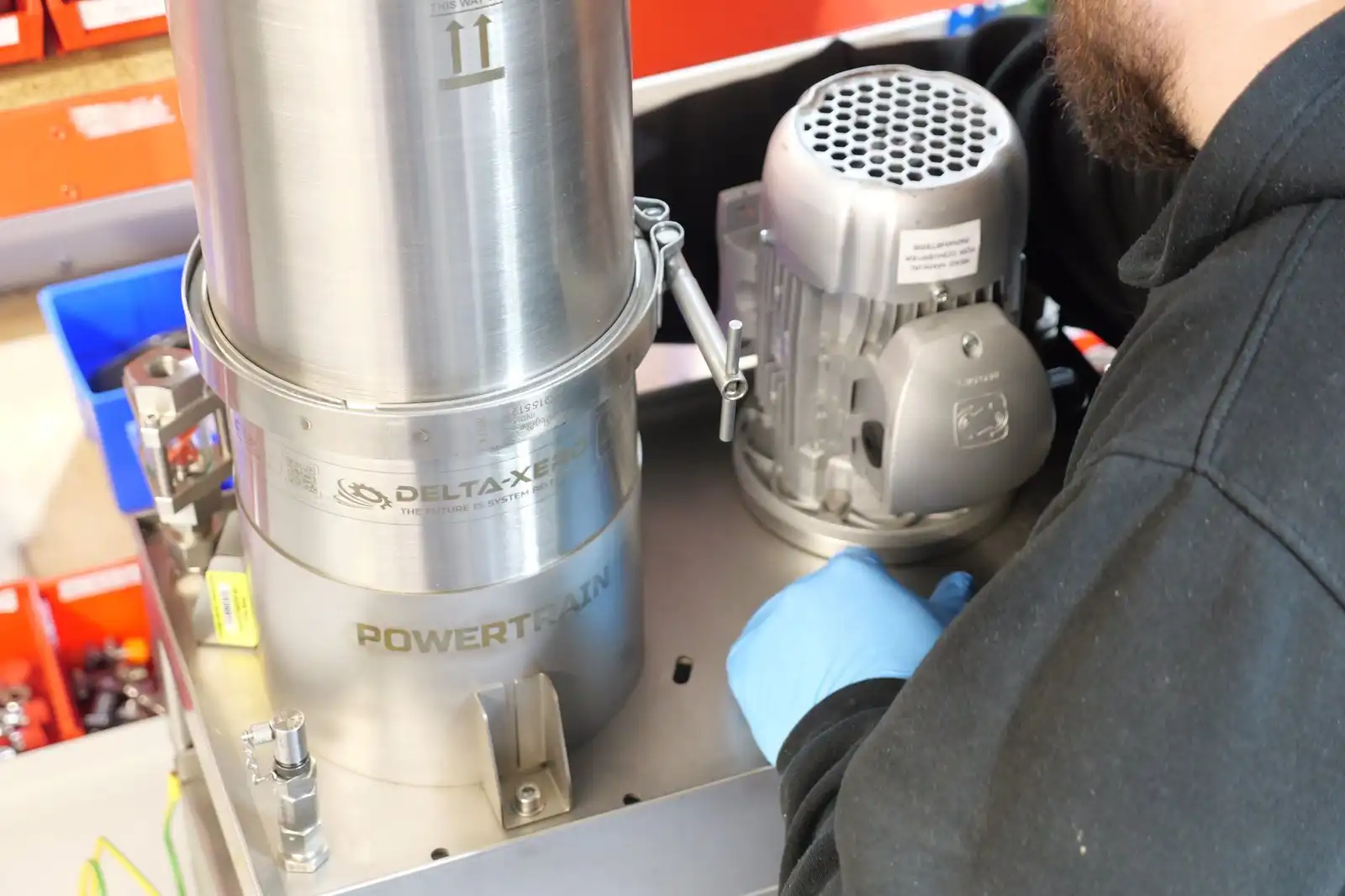
A Powertrain unit is connected to the engine's oil system and cleans the oil of fine particles, water and degradation products down to 0.1 µm. The oil is changed according to its condition, not after a fixed number of hours.
Documented on real engines
At Enovert a CAT 3516 on landfill gas went from about 48 to 7 oil changes a year. At a UK power generation company the oil change was extended from about 150 to an average of 650 operating hours on three engines. And an independent study showed that the filtration does not remove the additives.
Case studies from the industry
Enovert: 7.2 times longer oil life and 41 fewer oil changes a year
about 487
Oil changes per year
Savings: about £80,000 in the first year, then about £68,000 a year
Read the caseGas engines on landfill gas: oil changes from about 150 to 650 operating hours
about 150 (weekly)650 on average
Oil change interval (operating hours)
Read the caseIndependent laboratory: the filtration does not remove the engine oil additives
3.13.8
Base number, BN (first and last sample)
Read the caseLandfill gas engines: 67 % fewer oil changes
67.4 %
fewer oil changes in the field test
Read the caseQuestions and answers
Does the filtration remove the engine oil additives?
No. POLARIS Laboratories followed the oil in a Jenbacher J316 on landfill gas with 14 samples over 8 weeks. Base number and acid number followed normal degradation, and the laboratory saw no sign that the additives were being removed.
The silicon reading hardly falls. Does it work then?
The standard analysis (ICP) only measures particles below about 10 µm and does not distinguish between forms of silicon. On one engine the silicon reading was almost unchanged, 261 and 240 ppm, while iron fell from 113 to 3 ppm and the membrane patch showed far fewer abrasive particles. That is why we use membrane patch testing alongside.
Which unit suits a gas engine?
The engine oil versions DX1003-T-PT-C and DX1006-T-PT-C have a heat exchanger with fan, a sampling port and a control panel. That is the type fitted to the CAT 3516 engines at Enovert. If the site has Ex zones, ATEX versions are available.
How much can the oil change be extended?
It depends on the gas and the engine and is decided by the oil samples. At Enovert oil life became 7.2 times longer, and at a UK power generation company the oil change went from about 150 to an average of 650 operating hours.
What do your oil changes cost?
Enter your own figures. The calculator adds no assumptions apart from the reduction in oil changes that you choose on the slider.
Enter litres per change, changes per year and oil price to see the calculation.
- Cost per change
- Cost today per year
- Cost with fewer changes
- Possible saving per year
Example: Enovert went from about 48 to 7 oil changes a year. Read the case study.
The figures stay in your browser and are not sent anywhere. We measure the real figure for your system with samples before and after in a pilot programme. How the pilot programme works.
Start with an oil sample
Samples are analysed in an independent laboratory with membrane patch testing alongside the standard analysis. If the figures show that the oil can stay in longer, the pilot programme runs with samples before and after.
Contact us, or call us on 76 20 80 10.