Gas engines on landfill gas: oil changes from about 150 to 650 operating hours
Gas engines on landfill gas typically have their oil changed every week because the silicon reading rises. With offline filtration and membrane patch testing by POLARIS Laboratories, a UK power generation company extended the oil change from about 150 to an average of 650 operating hours. Iron in the oil fell from 113 to 3 ppm at the same silicon level.
Oil change interval (operating hours)
In gas engines running on landfill gas, biogas or mine gas, it is typically the silicon reading that decides when the oil is changed. The limit is between about 100 and 300 ppm depending on the engine manufacturer and the gas, and many operators therefore change oil every week, even when base number, acid number and pH are fine. Silicon from dust and siloxanes in the gas is highly abrasive.
The standard silicon analysis (ICP to ASTM D5185) only measures particles below about 10 µm and does not distinguish between different forms of silicon. It therefore does not show whether the abrasive particles have actually been removed.
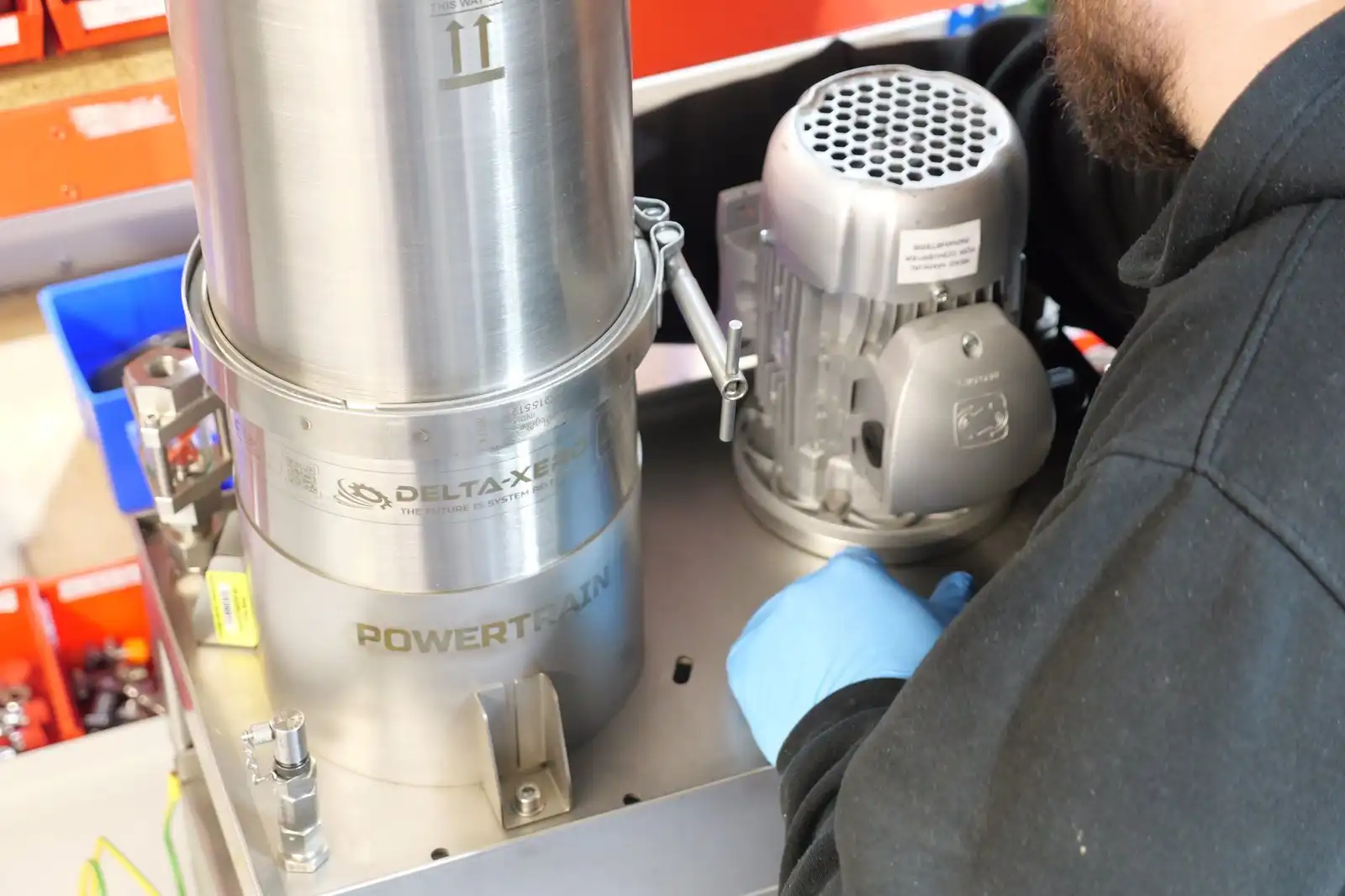
A UK power generation company had DX1006-T Powertrain units fitted to three gas engines at landfill sites. In addition to the routine oil analyses, POLARIS Laboratories also carried out membrane patch tests so the contamination could be seen.
On engine 1 the silicon reading was almost the same after 191 and 241 operating hours, 261 and 240 ppm. But iron had fallen from 113 to 3 ppm, and the membrane patch showed far fewer abrasive particles. The filtration had removed most of them. Base number and acid number stayed within the engine manufacturer’s limits.
With membrane patch testing and close sampling, the company has extended the oil change from about 150 hours to an average of 650 operating hours. That means fewer oil changes per engine and saves labour and disposal of used oil.
The figures before and after
| Measurement | Before | After |
|---|---|---|
| Oil change interval (operating hours) | about 150 (weekly) | 650 on average |
| Iron (ppm) | 113 | 3 |
| Silicon (ppm) | 261 | 240 |
| Base number, BN | 4.5 | 3.9 |
| Acid number, AN | 1.5 | 1.6 |
| Membrane patch, 500 times magnification | many abrasive particles and rust | far fewer abrasive particles |
Read the full case study
The rest of the case study, with every before and after measurement, opens once you have entered your work email and company. You only need to do this once; then every case study on the site is open.
We only use the details to see which companies are reading. You will not receive newsletters, and we will not call you.