Port cranes: cleaner diesel measured directly at the exhaust
On a port crane in Portsmouth, the diesel was cleaned with a permanently installed filter unit, and the effect was measured both in the tank and in the exhaust: 99.5 % fewer particles above 4 µm and up to 72 % less NO2, measured with MCERTS-approved equipment.
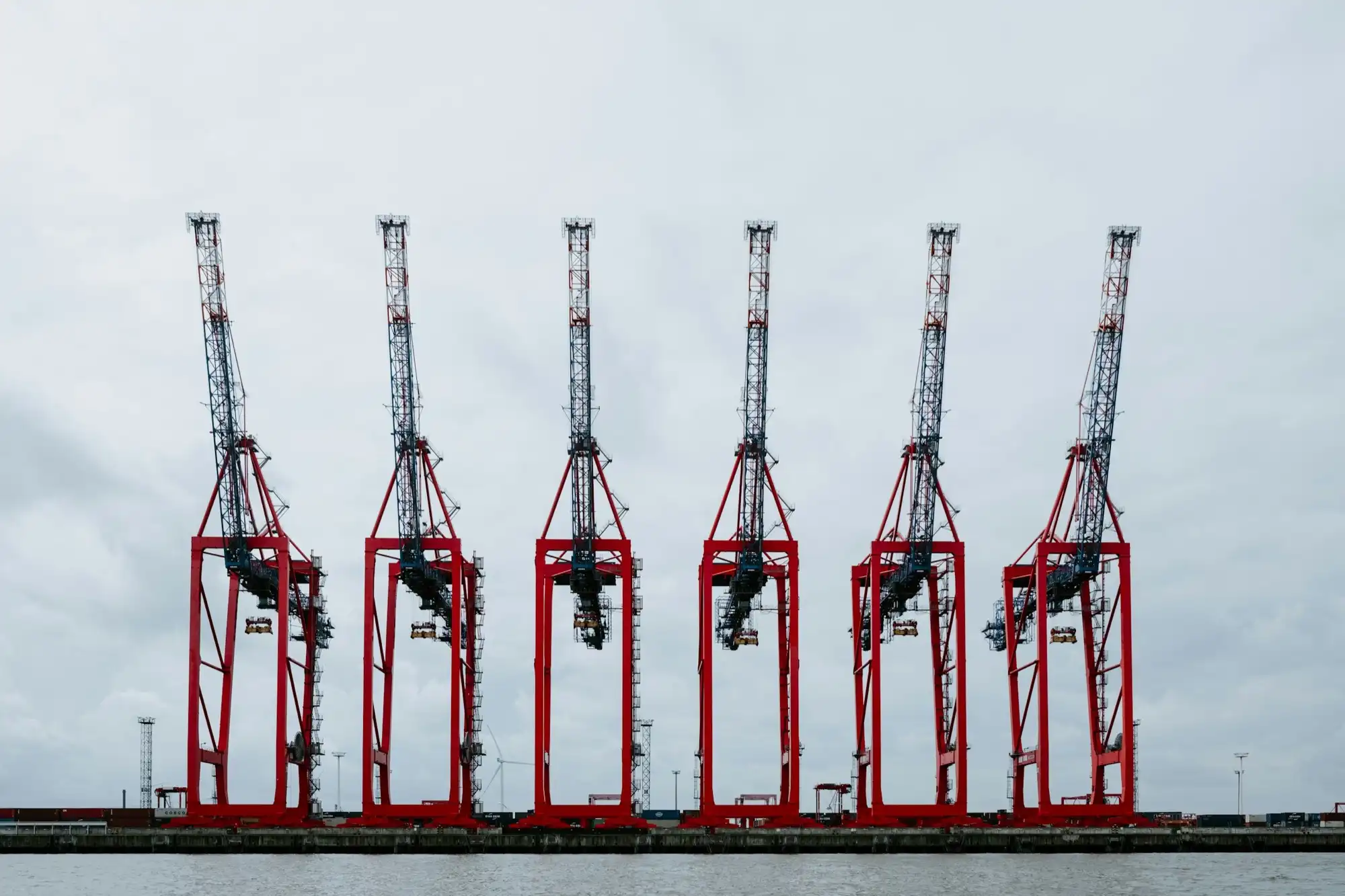
Portico Shipping operates the deep-water terminal at Portsmouth International Port. The terminal handles cargo of up to 250 tonnes. The cranes in this case are 125-tonne Gottwald Terex machines, and each crane is driven by a Cummins diesel engine that produces electricity and hydraulic pressure. The cranes were already running with Delta Xero filtration on the hydraulic oil.
An analysis showed that diesel cleanliness in the cranes’ fuel tanks was at a critical level. That threatened the reliability of injection systems and pumps, and it affected the exhaust from engines working in the middle of a city.
On crane 7, a Delta Xero DX1002-T was fitted to the main fuel tank together with an inline particle counter that measures cleanliness continuously to ISO 4406. The number of particles in the diesel fell by 99.5 % for particles above 4 µm, 99.7 % above 6 µm and 99.9 % above 14 µm.
What sets this case apart is that the effect was also measured at the exhaust. The measurements were made with a TESTO 350 gas analyser, which is MCERTS-approved, at the same measuring point and with the same test load of 8.9 tonnes before and after. On clean diesel, NOx fell by 44.68 % and NO2 by 72.41 % at full load with boom, and CO fell by 33.09 % at idle. For ports and terminals with emission requirements, these are figures that can be used directly in environmental reporting.
At the same time, the life of the engines’ own fuel filters was extended threefold, because the filters no longer have to carry the entire cleaning task alone.
“Since fitting Delta-Xero systems our crane downtime has reduced significantly and the life of our filters has been extended three-fold.”